

Xiaomi Redmi Pad 2 vs Xiaomi Redmi Pad Pro: Comparison
Comparison of features, performance, design, battery, camera and connectivity between the following tablets: Xiaomi Redmi Pad 2 vs Xiaomi Redmi Pad Pro
- Xiaomi Redmi Pad 2Global · 4GB · 128GB
- Xiaomi Redmi Pad ProGlobal · 6GB · 128GB
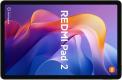
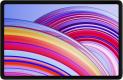
Basics |

Xiaomi Redmi Pad 2
Global · 4GB · 128GB
View datasheet
vs
|

Xiaomi Redmi Pad Pro
Global · 6GB · 128GB
View datasheet
vs
|
|---|
|
Xiaomi Redmi Pad 2 Global · 4GB · 128GB |
Xiaomi Redmi Pad Pro Global · 6GB · 128GB |
|
|---|---|---|
| Ki Cost-effective Score |
7.4
Ki Cost-effective Score |
7.8
Ki Cost-effective Score |
| Design and Screen score | 7.6Design & Materials | 8.2Design & Materials |
| Performance and Hardware score | 5.8Performance & Hardware | 6.5Performance & Hardware |
| Camera score | 6.1Camera | 6.5Camera |
| Connectivity score | 5.8 Connectivity | 6.6 Connectivity |
| Battery score | 6.7 Battery | 7.3 Battery |
|
Xiaomi Redmi Pad 2 Global · 4GB · 128GB |
Xiaomi Redmi Pad Pro Global · 6GB · 128GB |
|
|---|---|---|
| User score |
--
No user reviews
|
--
No user reviews
|
Technical specifications of the Xiaomi Redmi Pad 2 vs Xiaomi Redmi Pad Pro
| Specs |
 Xiaomi Redmi Pad 2
Global · 4GB · 128GB |
 Xiaomi Redmi Pad Pro
Global · 6GB · 128GB |
|---|---|---|
| Inches | 11" | 12.1" |
| Resolution | WQHD+ | WQHD+ |
| Usable surface | 88% useful | 87% useful |
| Aspect Ratio | 8:5 | 8:5 |
| Dimensions |
254.6 mm
166.0 mm 7.4 mm |
280.0 mm
181.9 mm 7.5 mm |
| Weight | 510 g | 571 g |
| Micro |
Helio G100 Octa-Core |
SnapD. 7s Gen2 Octa-Core |
| RAM | 4 GB RAM | 6 GB RAM |
| Storage | 128 GB | 128 GB |
| AnTuTu |
410.000 v10 |
615.824 v10 |
| Battery | 9000 mAh | 10000 mAh |
| Main Camera |
1
8 Mpx · ƒ/2.0 |
1
8 Mpx · ƒ/1.8 |
| Selfie Camera | SELF 5 Mpx · ƒ/2.2 | SELF 8 Mpx · Unknow |
| Bands | ||
| OS | Android 15 | Android 14 Upside-down cake |
About this comparison
Xiaomi Redmi Pad 2 vs Xiaomi Redmi Pad Pro: A Comparison of Two Mid-Range Tablets
When it comes to choosing a tablet, there are numerous options available in the market. Xiaomi, a well-known brand in the tech industry, offers two mid-range tablets that have caught the attention of consumers - the Xiaomi Redmi Pad 2 and the Xiaomi Redmi Pad Pro. Both tablets come with impressive specifications and features, making it difficult for consumers to decide which one to go for. In this article, we will compare the two tablets in terms of design, hardware, camera, connectivity, and battery to help you make an informed decision.
Design & Materials
Starting with the design and materials, the Xiaomi Redmi Pad 2 features a 11.00-inch LCD IPS screen with a resolution of 2560x1600 (WQHD+). It has a refresh rate of 90 Hz and a brightness of 500 cd/m². The tablet also comes with stereo speakers, Hi-Res Audio, and Dolby Atmos for an immersive audio experience. The body of the Redmi Pad 2 is made of polycarbonate, giving it a sturdy yet light feel. The usable surface of the tablet is 88.2%, providing ample screen space for multimedia consumption.
On the other hand, the Xiaomi Redmi Pad Pro boasts a slightly larger 12.10-inch LCD IPS screen with the same resolution of 2560x1600 (WQHD+). It has a higher refresh rate of 120 Hz but a slightly lower brightness of 400 cd/m². The Redmi Pad Pro also comes with stereo speakers, Hi-Res Audio, and Dolby Atmos, along with the added advantage of four speakers for a more immersive audio experience. The body of the Redmi Pad Pro is made of aluminium, giving it a premium look and feel. Additionally, the tablet features Corning Gorilla Glass 3 for added durability. The usable surface of the Redmi Pad Pro is 87.1%, slightly lower than the Redmi Pad 2 but still providing ample screen space.
In terms of design and materials, both tablets offer a sleek and modern look with high-quality displays and audio capabilities. The Redmi Pad Pro edges slightly ahead with its premium aluminium build and additional speakers.
Hardware
Moving on to the hardware, the Xiaomi Redmi Pad 2 is powered by a MediaTek Helio G100 processor built on a 6nm architecture. It comes with three RAM options - 4GB, 6GB, and 8GB - all of which are LPDDR4X RAM. The tablet also offers two storage options - 128GB and 256GB - with the ability to expand storage via external SD card. The Redmi Pad 2 has an AnTuTu score of 410,000, indicating smooth performance for day-to-day tasks.
On the other hand, the Xiaomi Redmi Pad Pro is equipped with a Qualcomm Snapdragon 7s Gen2 processor built on a 4nm architecture. It comes with two RAM options - 6GB and 8GB - both of which are LPDDR4X RAM. The tablet also offers two storage options - 128GB and 256GB - utilizing UFS Storage 2.2 technology for faster data transfer speeds. The Redmi Pad Pro has an impressive AnTuTu score of 615,824, indicating superior performance compared to the Redmi Pad 2.
In terms of hardware, the Redmi Pad Pro outperforms the Redmi Pad 2 with its more powerful processor and higher AnTuTu score, providing a smoother and faster user experience.
Camera
When it comes to the camera, both tablets feature an 8.0-megapixel standard rear camera with similar aperture settings. The Redmi Pad 2 has an aperture of f/2.0 and a pixel size of 1.120, while the Redmi Pad Pro has an aperture of f/1.8. Both tablets come with CMOS sensors for capturing detailed and vibrant images.
In terms of selfie cameras, the Redmi Pad 2 features a 5.0-megapixel front camera with an aperture of f/2.2, while the Redmi Pad Pro features an 8.0-megapixel front camera with an unknown aperture setting. Both tablets offer decent selfie capabilities for video calls and selfies.
Connectivity
In terms of connectivity, both tablets offer Bluetooth 5.2, an audio jack, and WiFi 6 (802.11ax) for fast and stable wireless connections. The Redmi Pad Pro comes with Bluetooth 5.2, a slightly newer version compared to the Redmi Pad 2's Bluetooth 5.3. Overall, both tablets offer reliable connectivity options for seamless use.
Battery
Lastly, let's talk about the battery life of the two tablets. The Xiaomi Redmi Pad 2 is equipped with a 9000mAh battery with 18.0W fast charging support, allowing for long hours of usage without needing frequent recharges. On the other hand, the Xiaomi Redmi Pad Pro features a larger 10000mAh battery with 33.0W fast charging support, providing even longer battery life and faster charging times.
In conclusion, both the Xiaomi Redmi Pad 2 and the Xiaomi Redmi Pad Pro offer impressive specifications and features, making them attractive options for consumers looking for a mid-range tablet. The Redmi Pad Pro stands out with its premium design, more powerful hardware, and longer battery life. However, the Redmi Pad 2 offers a solid performance at a slightly lower price point, making it a more budget-friendly option. Ultimately, the choice between the two tablets will depend on your specific needs and preferences.
|
Xiaomi Redmi Pad 2 Global · 4GB · 128GB |
Xiaomi Redmi Pad Pro Global · 6GB · 128GB |
|
|---|---|---|
| Brand | Xiaomi | Xiaomi |
| Aliases | 25040RP0AG, 2505DRP06E | Xiaomi Redmi Pad M86, Redmi Pad Pro系列 |
|
Xiaomi Redmi Pad 2 Global · 4GB · 128GB |
Xiaomi Redmi Pad Pro Global · 6GB · 128GB |
|
|---|---|---|
| Release date |
May 2025, 1 year ago |
April 2024, 2 years ago |
| State | On Sale | On Sale |
| Market | Global | Global |
Design & Materials
Structure
|
Xiaomi Redmi Pad 2 Global · 4GB · 128GB |
Xiaomi Redmi Pad Pro Global · 6GB · 128GB |
|
|---|---|---|
| Size |
254.6 mm
•
166.0 mm
•
7.4 mm
See more details
|
280.0 mm
•
181.9 mm
•
7.5 mm
See more details
|
| Weight | 510 g | 571 g |
| Usable surface | 88 % | 87 % |
| Materials | Polycarbonate, Aluminium | Aluminium |
| Resistance | IP52 | - |
| Colors |
Gray
Purple
Green
Cyan
Lilac
|
Blue
Gray
Green
|
|
Xiaomi Redmi Pad 2 Global · 4GB · 128GB |
Xiaomi Redmi Pad Pro Global · 6GB · 128GB |
|
|---|---|---|
| Diagonal | 11" | 12.1" |
| Type | LCD IPS | LCD IPS |
| Aspect Ratio | 8:5 | 8:5 |
| Resolution |
WQHD+ 2560 x 1600 px |
WQHD+ 2560 x 1600 px |
| Brightness | 500 nits | 400 nits |
| Peak brightness | -- | -- |
| Maximum brightness (HBM) | 600 nits | 600 nits |
| Density | 274 Pixels per inch | 243 Pixels per inch |
Others
- Without Notch
- Refresh rate 90 Hz
- Brightnes 500 cd/m² (typ)
- TÜV Rheinland Eye Comfort Certification
- Scratch resistant
- Capacitive
- Multi-touch
- Without Notch
- Refresh rate 120 Hz
- Touch sampling rate 180 Hz
- Brightnes 400 cd/m² (typ)
- 1500:1 contrast ratio
- TÜV Rheinland Eye Comfort Certification
- DCI-P3
- 70% NTSC
- 100% NTSC
- Dolby Vision
- Scratch resistant
- Corning Gorilla Glass 3
- Stylus
- S-Pen
- Capacitive
- Multi-touch
Performance & Hardware
|
Xiaomi Redmi Pad 2 Global · 4GB · 128GB |
Xiaomi Redmi Pad Pro Global · 6GB · 128GB |
|
|---|---|---|
| Model | MediaTek Helio G100 | Qualcomm Snapdragon 7s Gen2 (SM-7435AB) |
| CPU | 2x2.2GHz Cortex-A76 + 6x2GHz Cortex-A55 | 4x2.4GHz Cortex A78 +4x1.95GHz Cortex A55 |
| Type | Octa-Core | Octa-Core |
| Manufacturing | 6 nm | 4 nm |
| 64 Bits | Yes | Yes |
|
Xiaomi Redmi Pad 2 Global · 4GB · 128GB |
Xiaomi Redmi Pad Pro Global · 6GB · 128GB |
|
|---|---|---|
| GPU | Arm Mali-G57 MC2 | Adreno 710 |
|
Xiaomi Redmi Pad 2 Global · 4GB · 128GB |
Xiaomi Redmi Pad Pro Global · 6GB · 128GB |
|
|---|---|---|
| RAM | 4 GB | 6 GB |
| Type | LPDDR4X RAM | LPDDR4X RAM |
|
Xiaomi Redmi Pad 2 Global · 4GB · 128GB |
Xiaomi Redmi Pad Pro Global · 6GB · 128GB |
|
|---|---|---|
| Score |
410.000
Antutu v10
Overall performance better than 69% of devices
See more details
|
615.824
Antutu v10
Overall performance better than 74% of devices
See more details
|
|
Xiaomi Redmi Pad 2 Global · 4GB · 128GB |
Xiaomi Redmi Pad Pro Global · 6GB · 128GB |
|
|---|---|---|
| Capacity | 128 GB | 128 GB |
| Type | -- | UFS Storage 2.2 |
| SD Slot |
Yes
, Independent SD slot |
Yes
, Independent SD slot |
|
Xiaomi Redmi Pad 2 Global · 4GB · 128GB |
Xiaomi Redmi Pad Pro Global · 6GB · 128GB |
|
|---|---|---|
| Fingerprint | No | No |
|
Xiaomi Redmi Pad 2 Global · 4GB · 128GB |
Xiaomi Redmi Pad Pro Global · 6GB · 128GB |
|
|---|---|---|
| Sensors |
|
|
Audio
- Dolby Atmos
- Hi-Res Audio
- Stereo Speakers
- Dolby Atmos
- Hi-Res Audio
- Stereo Speakers
|
Xiaomi Redmi Pad 2 Global · 4GB · 128GB |
Xiaomi Redmi Pad Pro Global · 6GB · 128GB |
|
|---|---|---|
| Notifications LED | -- | -- |
| Cooling system | No | No |
| Gaming buttons | No | No |
Camera
|
Xiaomi Redmi Pad 2 Global · 4GB · 128GB |
Xiaomi Redmi Pad Pro Global · 6GB · 128GB |
|
|---|---|---|
| No. of cameras | Rear camera | Rear camera |
| 1 Camera type |
Standard |
Standard |
| Resolution | 8 Mpx | 8 Mpx |
| Aperture | ƒ/ 2.0 | ƒ/ 1.8 |
| Optical zoom | -- | -- |
| View angle | -- | -- |
| Sensor | Unknown | Unknown |
| Type | CMOS | CMOS |
| ISO | -- | -- |
| Pixel size | 1.12 µm | -- |
| Pixel Binning | -- | -- |
| Sensor size | -- | -- |
|
Xiaomi Redmi Pad 2 Global · 4GB · 128GB |
Xiaomi Redmi Pad Pro Global · 6GB · 128GB |
|
|---|---|---|
| Flash | LED | LED |
| Optical Stabilisation | No | No |
| Slow Motion Video |
No, 30 fps |
No, 30 fps |
| Others |
|
|
|
Xiaomi Redmi Pad 2 Global · 4GB · 128GB |
Xiaomi Redmi Pad Pro Global · 6GB · 128GB |
|
|---|---|---|
| SELF Camera type |
Dedicated |
Dedicated |
| Resolution | 5 Mpx | 8 Mpx |
| Aperture | ƒ/ 2.2 | Unknow |
| Optical zoom | -- | -- |
| View angle | -- | -- |
| Sensor | Unknown | Unknown |
| Type | CMOS | CMOS |
| Pixel size | -- | -- |
| Pixel Binning | -- | -- |
| Sensor size | -- | -- |
|
Xiaomi Redmi Pad 2 Global · 4GB · 128GB |
Xiaomi Redmi Pad Pro Global · 6GB · 128GB |
|
|---|---|---|
| DxOMark Score | -- | -- |
Connectivity
Network compatibility
|
Xiaomi Redmi Pad 2 Global · 4GB · 128GB |
Xiaomi Redmi Pad Pro Global · 6GB · 128GB |
|
|---|---|---|
| 5G | -- | -- |
| 4G LTE | -- | -- |
| 3G | -- | -- |
| 2G | -- | -- |
|
Xiaomi Redmi Pad 2 Global · 4GB · 128GB |
Xiaomi Redmi Pad Pro Global · 6GB · 128GB |
|
|---|---|---|
| Dual SIM | ||
| Type |
|
|
|
Xiaomi Redmi Pad 2 Global · 4GB · 128GB |
Xiaomi Redmi Pad Pro Global · 6GB · 128GB |
|
|---|---|---|
| Wi-Fi |
|
|
| Others |
|
|
|
Xiaomi Redmi Pad 2 Global · 4GB · 128GB |
Xiaomi Redmi Pad Pro Global · 6GB · 128GB |
|
|---|---|---|
| Version | Bluetooth 5.3 LE Low energy consumption | Bluetooth 5.2 LE Low energy consumption |
| Others |
|
|
|
Xiaomi Redmi Pad 2 Global · 4GB · 128GB |
Xiaomi Redmi Pad Pro Global · 6GB · 128GB |
|
|---|---|---|
| Navigation | -- |
|
|
Xiaomi Redmi Pad 2 Global · 4GB · 128GB |
Xiaomi Redmi Pad Pro Global · 6GB · 128GB |
|
|---|---|---|
| USB |
|
|
|
Xiaomi Redmi Pad 2 Global · 4GB · 128GB |
Xiaomi Redmi Pad Pro Global · 6GB · 128GB |
|
|---|---|---|
| European measurement The European Union sets a limit of 2 W/kg averaged over 10 grams of tissue. |
-- | -- |
| American measurement The FCC limit is 1.6 W/kg measured in a volume of 1 gram of tissue |
-- | -- |
|
Xiaomi Redmi Pad 2 Global · 4GB · 128GB |
Xiaomi Redmi Pad Pro Global · 6GB · 128GB |
|
|---|---|---|
| Others |
|
|
Battery
|
Xiaomi Redmi Pad 2 Global · 4GB · 128GB |
Xiaomi Redmi Pad Pro Global · 6GB · 128GB |
|
|---|---|---|
| Capacity |
9000 mAh
See more details
|
10000 mAh
See more details
|
| Type | Li-Polymer | Li-Ion Polymer |
| Fast charge |
Yes, 18.0W |
Yes, 33.0W |
| Others |
|
|
User reviews
Software
|
Xiaomi Redmi Pad 2 Global · 4GB · 128GB |
Xiaomi Redmi Pad Pro Global · 6GB · 128GB |
|
|---|---|---|
| Operating System |
|
|
| Google Services | With Google Mobile Services | With Google Mobile Services |
User reviews
Others
Common comparisons
-
Xiaomi Redmi Pad 2
Global · 4GB · 128GB
From $ 178
 vs
vs
 Xiaomi Redmi Pad 2 Pro
Global · 6GB · 128GB · WiFi
From $ 225
Xiaomi Redmi Pad 2 Pro
Global · 6GB · 128GB · WiFi
From $ 225
-
Lenovo Idea Tab
Global · 8GB · 128GB · Wi-Fi
From $ 216
 vs
Xiaomi Redmi Pad 2
Global · 4GB · 128GB
From $ 178
vs
Xiaomi Redmi Pad 2
Global · 4GB · 128GB
From $ 178
-
Xiaomi Redmi Pad 2
Global · 4GB · 128GB
From $ 178
vs
 Xiaomi REDMI Pad 2 9.7
International · 4GB · 64GB
From $ 144
Xiaomi REDMI Pad 2 9.7
International · 4GB · 64GB
From $ 144
-
Samsung Galaxy Tab A11
Global · 4GB · 64GB · WiFi
From $ 107
 vs
Xiaomi Redmi Pad 2
Global · 4GB · 128GB
From $ 178
vs
Xiaomi Redmi Pad 2
Global · 4GB · 128GB
From $ 178
-
Xiaomi Redmi Pad 2
Global · 4GB · 128GB
From $ 178
vs
 Xiaomi Redmi Pad SE
Global · 4GB · 128GB
From $ 190
Xiaomi Redmi Pad SE
Global · 4GB · 128GB
From $ 190
-
Xiaomi Redmi Pad 2 Pro
Global · 6GB · 128GB · WiFi
From $ 225
vs
 Xiaomi Redmi Pad Pro
Global · 6GB · 128GB
From $ 242
Xiaomi Redmi Pad Pro
Global · 6GB · 128GB
From $ 242
-
Xiaomi Redmi Pad 2
Global · 4GB · 128GB
From $ 178
vs
Xiaomi Redmi Pad Pro
Global · 6GB · 128GB
From $ 242
-
Xiaomi Pad 7
Global · 8GB · 128GB
From $ 319
 vs
Xiaomi Redmi Pad Pro
Global · 6GB · 128GB
From $ 242
vs
Xiaomi Redmi Pad Pro
Global · 6GB · 128GB
From $ 242
-
POCO Pad M1
Global · 8GB · 256GB
From $ 229
 vs
Xiaomi Redmi Pad Pro
Global · 6GB · 128GB
From $ 242
vs
Xiaomi Redmi Pad Pro
Global · 6GB · 128GB
From $ 242
-
POCO Pad
International · 8GB · 256GB
From $ 343
 vs
Xiaomi Redmi Pad Pro
Global · 6GB · 128GB
From $ 242
vs
Xiaomi Redmi Pad Pro
Global · 6GB · 128GB
From $ 242

